
Why Orton-Gillingham works —
and why who teaches it matters just as much
If your child has struggled with reading despite working hard, the problem isn't their intelligence or their effort. It's that most reading instruction wasn't designed for the way their brain processes language. Orton-Gillingham was.
Most reading help doesn't fix the actual problem
When a child struggles to read, the most common responses are more time with the same methods, or general tutoring. These can help in some cases — but for students with dyslexia, they often just extend the frustration.
Generic tutoring
✗Reteaches the same material in the same way
✗Focuses on the grade-level text, not underlying skills
✗Doesn't address phonological processing deficits
✗One-size-fits-all pacing
✗Progress stalls when support ends
What is Orton-Gillingham?
Orton-Gillingham (OG) is a structured, sequential, multisensory approach to teaching reading and spelling developed in the 1930s by neurologist Dr. Samuel Orton and educator Anna Gillingham. Decades of research have confirmed what practitioners have observed for nearly a century: it works, especially for students with dyslexia.
Unlike whole-language or "balanced literacy" approaches that ask children to guess words from context, OG teaches the explicit relationship between letters and sounds — the actual mechanics of how written language is built. It leaves nothing to chance.
Multisensory
Visual, auditory, and kinesthetic channels reinforce each other simultaneously
Sequential
Each new concept builds on the last, so gaps never get papered over
Diagnostic
Pacing adjusts continuously based on how the student responds — not a fixed timeline
Explicit
Rules are taught directly — students aren't expected to "absorb" patterns on their own
Structured
Skills are taught in a specific, logical sequence — nothing is skipped or assumed
Cumulative
Concepts are reviewed consistently so skills become automatic, not fragile
Orton-Gillingham therapy
✓Teaches through the channel the student's brain responds to
✓Builds the foundational skills that make reading possible
✓Directly targets phonemic awareness and decoding
✓Moves at the student's pace, not the calendar's
✓Creates lasting, transferable skills
Why Credentials Matter
Not everyone who uses OG materials is a trained OG therapist
Orton-Gillingham isn't a product you buy — it's a clinical skill you develop through hundreds of hours of supervised practice. Many tutors and reading programs use OG-"inspired" materials, but the name on the curriculum isn't what makes the difference. The practitioner is.
A Certified Academic Language Therapist (CALT) has completed the most rigorous training path in the field. It's the credential held by practitioners who don't just follow a script — they understand why each step works and can adapt in real time when a student needs something different.
700+ supervised hours
Clinical practice under direct supervision before certification
Rigorous written exam
Deep knowledge of language structure, not just lesson delivery
Ongoing education
Required continuing education to maintain the credential
The risk of "OG-based" programs without a trained therapist
A well-meaning tutor following an OG workbook can make real progress — or can unknowingly move too fast, skip critical prerequisite skills, or miss the signs that a different approach is needed. For a child who has already spent years struggling, that gap matters. The goal isn't just progress. It's building a foundation that holds.
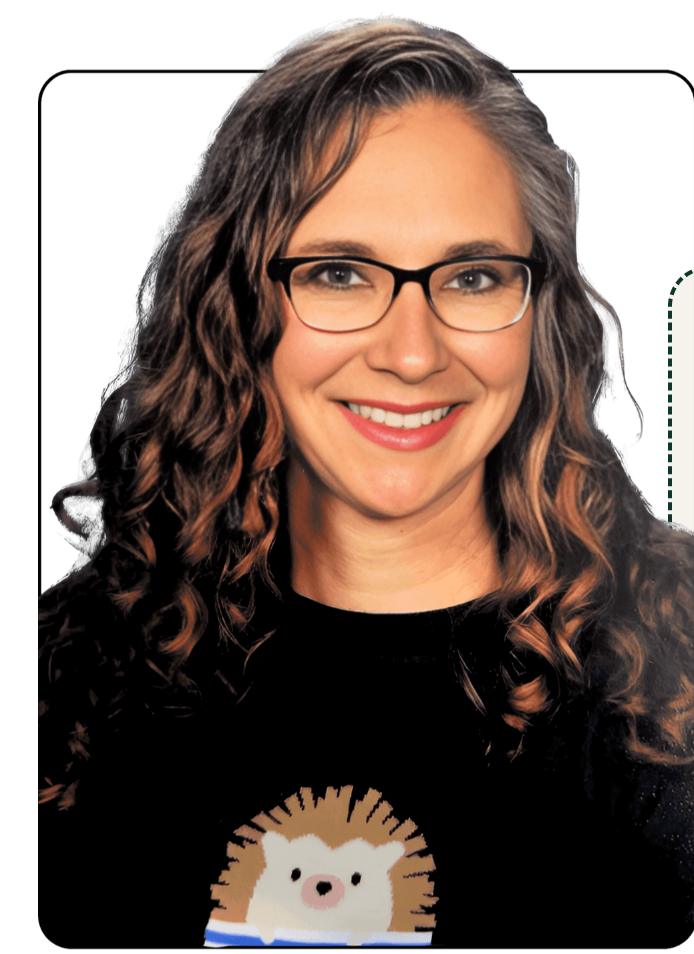
Kristen has spent 20 years learning exactly how to do this well
As a CALT trained at Rawson Saunders Institute with a master's degree in reading, she brings both the clinical certification and the classroom depth that most practitioners have one or the other of — rarely both.